Biomedical Engineering Chemistry
List of Laboratories
Analytical Chemistry of Materials
Our research group leverages the power of chemistry to design functional molecular probes for the exploration and control of biological systems. Through a multidisciplinary approach merging organic chemistry, chemical biology, and analytical chemistry, we develop innovative probes to tackle the challenges of in vivo functional analysis and regulation in complex organisms, including mice and humans.
https://bioan.mc.kyoto-u.ac.jp/
Munetaka Oyama Associate Professor
Hiroshi Nonaka Associate Professor

Hydrocarbon Chemistry Fundamentals
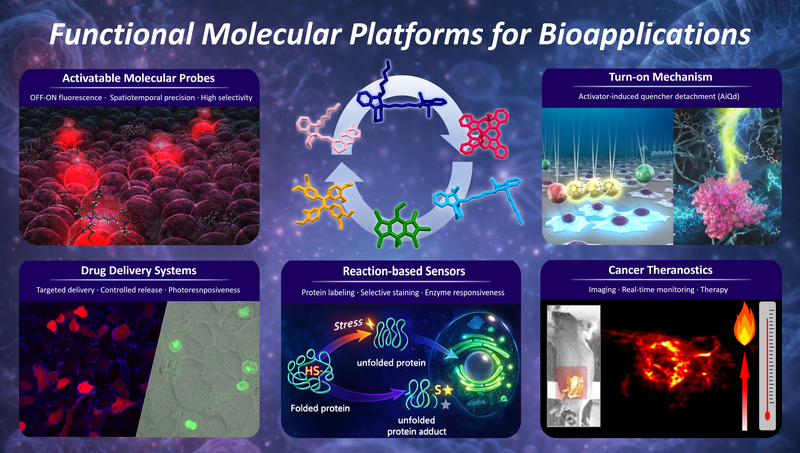
Many organic compounds, including hydrocarbons, possess π-conjugated molecular frameworks. Our laboratory aims to develop new synthetic methodologies for creating such molecules, with particular emphasis on functional molecules that absorb light and express their functions in the form of fluorescence or heat. Using these photoresponsive molecules, we are engaged in the detection of biomarkers expressed within cells and living systems. Furthermore, by harnessing their unique molecular properties, we aim to establish new drug delivery systems and to develop and translate theranostic agents that enable simultaneous cancer diagnosis and therapy.
https://www.ehcc.kyoto-u.ac.jp/eh31/home2/index-e.html
Koji Miki Associate Professor
Huiying MU Assistant Professor
Advanced Biomedical Chemistry
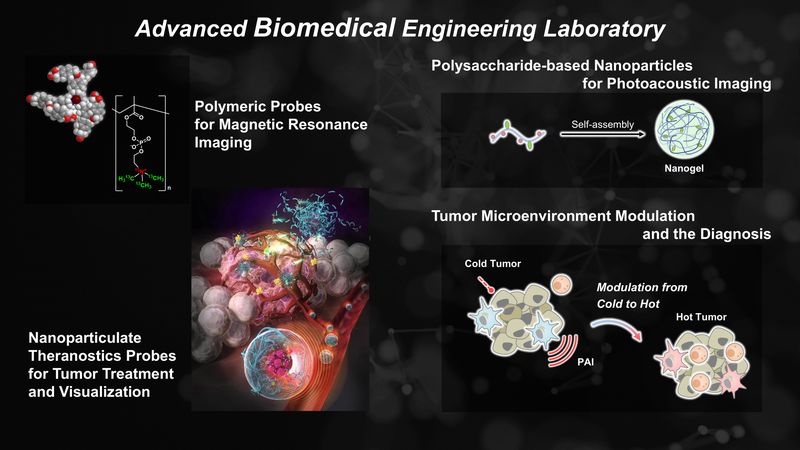
In recent years, the boundaries of academic discipline have faded, and interdisciplinary research has developed rapidly. Our research group is promoting cutting-edge research to realize “Theranostics” that simultaneously conducts diagnosis and treatment. Based on engineering-specific perspective and methodology. and full use of various “chemistry” from organic synthetic chemistry, organometallic chemistry, polymer chemistry, and inorganic chemistry, we are conducting consistent research to design and synthesize innovative “Theranostics Probes” specific to diseases that are highly required in the clinical field, and to evaluate the functionality and safety through cell and animal experiments.
https://www.abe.ehcc.kyoto-u.ac.jp/?lang=en
Teruyuki Kondo Professor
Yu Kimura Associate Professor
Risako Miura Assistant Professor
Bio-macromolecular Science
We are studying the self-organization of bio-macromolecules, expanding into biomembrane engineering, bioinspired chemistry, and regenerative medicine. By reconstructing bio-macromolecules like proteins and nucleic acids, we aim to understand life phenomena and explore applications in medicine, drug discovery, and the environment. Bio-macromolecules are deeply connected with both humans and the Earth. Through polymer chemistry, we aim to create a future where sustainable development and environmental health are closely linked.
Yoshihiro Sasaki Professor
Ryosuke Mizuta Assistant Professor
Developmental Systems
Our lab develops foundational technologies to induce functional organs from ES/iPS cells for regenerative medicine. By leveraging organoid technology to decode complex developmental systems, we bridge the gap between basic biology and clinical application. As an interdisciplinary hub merging biology, engineering, medicine, and informatics, we are at the forefront of a globally vibrant research field. We strive to translate our fundamental findings into the next generation of regenerative medicine. We invite passionate researchers and students to join our international team and push the boundaries of modern science together.
https://www2.infront.kyoto-u.ac.jp/bs01/aboutus_en.html
Mototsugu Eiraku Professor
Masatoshi Ohgushi Associate Professor
Yusuke Mii Assistant Professor
Zhe Wang(*)Assistant Professor
Bioorganic Chemistry
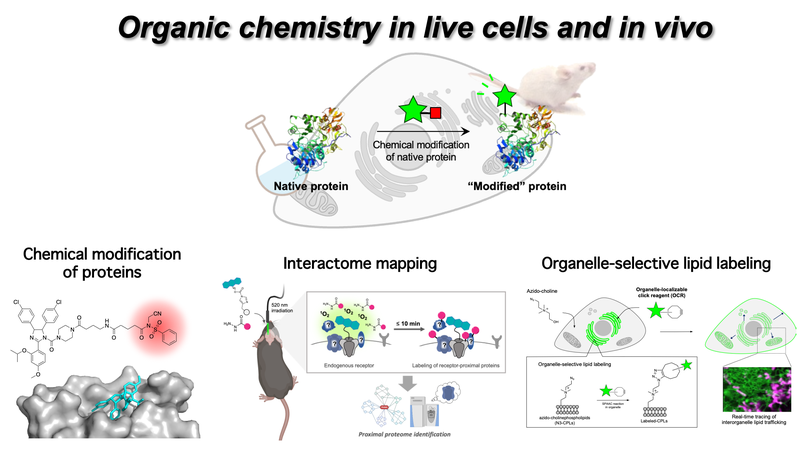
Our laboratory aims to pioneer organic chemistry compatible in living systems by conducting chemical biology research that integrates organic chemistry, molecular recognition chemistry, analytical chemistry, biochemistry, and molecular biology. For example, we develop molecular probes for visualizing biomolecules such as proteins and lipids, and we work on analyzing protein–protein interaction networks using photocatalysis. Furthermore, by leveraging these molecular technologies, we are also tackling the elucidation of brain function and the development of novel cancer therapies.
https://bioorgchem-lab.sbchem.kyoto-u.ac.jp/
Tomonori Tamura Associate Professor
Molecular Biology
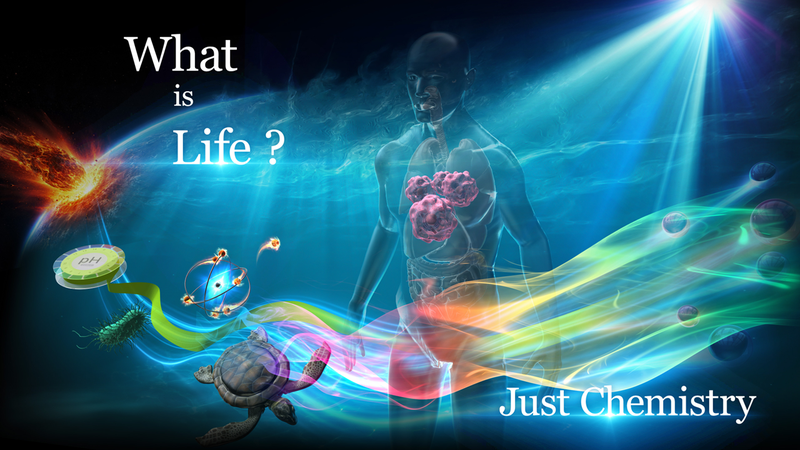
Since the birth of Earth, chemical stresses such as oxidation, hypoxia, and pH fluctuations, arising from changes in atmospheric oxygen and carbon dioxide levels, have shaped life. While these stresses threaten survival, they also drive biological evolution by promoting adaptation to adversity and, in modern contexts, are closely linked to many diseases. We re-examine life phenomena at the molecular level through a “chemical lens,” tackling these challenges with creative thinking and aiming for discoveries that will leave a lasting mark on our understanding of evolution and diseases such as cancer.
https://takahashi-lab.sbchem.kyoto-u.ac.jp/en/
Nobuaki Takahashi Professor
Yoshifumi Ueda Assistant Professor
Biorecognition Chemistry
All life forms on Earth utilize ATP as an energy source to create and maintain life order. Mg²⁺ is an essential life metal ion that functions by forming a 1:1 complex with ATP, yet the mechanisms regulating it within cells and organisms remained largely unknown. We are dedicated to identifying the molecular mechanisms involved in Mg²⁺ regulation. Through multi-level analysis encompassing genes, proteins, cells, and organisms, we are elucidating its role in fundamental life functions and demonstrating how its dysregulation contributes to the onset of various intractable human diseases, including cancer and psychiatric disorders.
https://miki-lab.sbchem.kyoto-u.ac.jp/
Hiroaki Miki Professor
Yosuke Funato Associate Professor
Osamu Hashizume Assistant Professor
Biochemical Engineering
Recent advances in cultivation and DNA sequencing technology have greatly expanded our recognition on the diversity of microbial life and their functions. Our group is engaged in genome-based research on the metabolism and physiology of particular groups of microorganisms, including (i) extremophiles that thrive under harsh conditions such as high temperature, high salt concentrations and low pH, (ii) archaea, that represent the third domain of life, and (iii) intestinal bacteria that exhibit a variety of biological and physiological activity in human intestine. Through this research, we aim to obtain knowledge on how microorganisms adapt to their environments, their metabolic mechanisms, and the evolution of life.
https://www.sbchem.kyoto-u.ac.jp/atomi-lab/
Haruyuki Atomi Professor
Takaaki Sato Associate Professor
Yuta Michimori Assistant Professor
Transport Phenomena
Our Laboratory studies non-equilibrium physics and biophysics across a wide range of systems, including biological phenomena. Systems in which mass and energy continuously flow are called nonequilibrium systems, and they exhibit pattern formation and life-related functions that do not arise at equilibrium. Our research focuses on soft active matter such as self-propelled particles, multi-cellular organoids showing collective cell motion, the energetics of nanoscale molecular motors, and artificial cells. By integrating experiments, theory, and computation, we aim to establish a novel understanding of “living matter” to bridge the gap between physics and biological chemistry.
https://nln.cheme.kyoto-u.ac.jp
Yusuke T. Maeda Professor
Kazusa Beppu Assistant Professor
Hiroyuki Maruyama Assistant Professor