Energy and Environmental Chemistry
List of Laboratories
Organic Reaction Chemistry
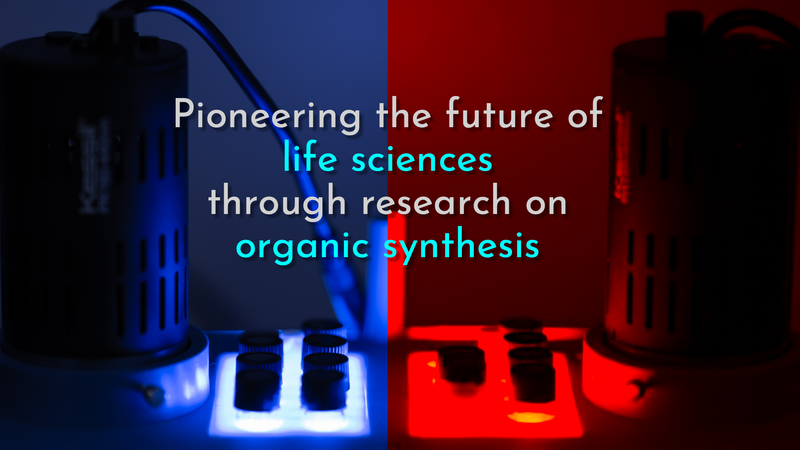
Our research group develops organic synthetic methodologies that enable precise control of radical reactions (involving atoms or molecules with unpaired electrons) using environmentally benign moleculer catalysts and reagents. Based on these approaches, we pursue chemical modification of pharmaceutical candidates and nucleic acid therapeutics, as well as the development of new technologies that allow optical control of biological functions, with the aim of contributing to advances in drug discovery and life science research.
https://www.fos.kuicr.kyoto-u.ac.jp/eng/
Hirohisa Ohmiya Professor
Kazunori Nagao Associate Professor
Sho Murakami Assistant Professor
Taichi YUMURA(*)Assistant Professor
Organic Molecular Chemistry
We pursue the development of new reactions that enable the direct transformation of ubiquitous bonds in organic molecules and the advanced utilization of abundant resources such as silicon and biomass. Through these efforts, we aim to achieve fundamental improvements in the efficiency of existing chemical processes and the creation of previously inaccessible molecules. Specifically, we focus on the design of new molecular catalysts, including cooperative catalytic systems centered on transition metal complexes, to realize sustainable chemical synthesis.
http://www.npc05.kuic.kyoto-u.ac.jp/npc05/?lang=en
Yoshiaki Nakao Professor
Miyuto Kashihara Assistant Professor
Natsuki Kato Assistant Professor
Applied Electrochemistry
Addressing the environmental and resource challenges confronting modern society while simultaneously resolving pressing energy issues requires the clean conversion of finite energy resources into desired forms of energy, together with substantial improvements in their overall utilization efficiency. Our laboratory pursues fundamental research in the field of electrochemical energy conversion with the aim of advancing battery technologies that store electrical energy and thereby enhance the efficiency with which electricity is utilized. In particular, our research focuses on the interface, the site at which electrochemical conversion reactions occur. By elucidating the fundamental principles governing interfacial processes, we seek to establish scientific guidelines for enhancing reaction kinetics and improving the reversibility of electrochemical reactions.
http://elech.kuic.kyoto-u.ac.jp/
Takeshi Abe Professor
Yuto Miyahara Assistant Professor
Functional Materials Chemistry
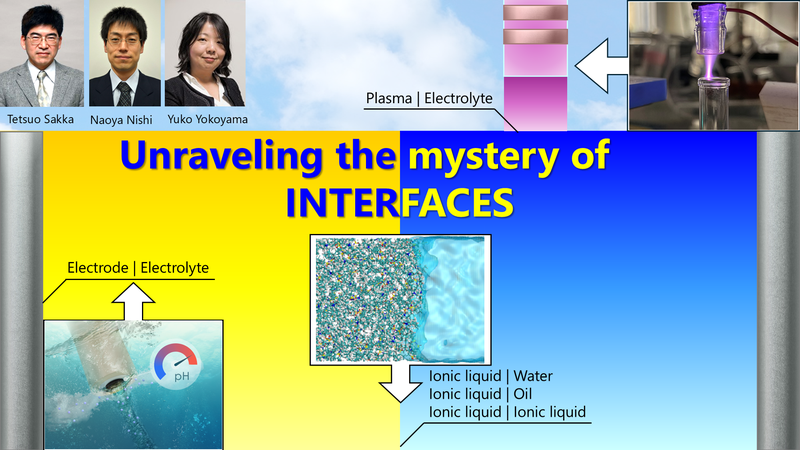
Interfaces formed between different materials, despite being only nanometers thick, are crucial reaction sites that determine the overall efficiency of systems such as energy conversion devices. Focusing particularly on electrochemical interfaces of liquids (solid-liquid, liquid-liquid, and even plasma-liquid interfaces), our laboratory studies the unique physicochemical properties of these interfaces, namely molecular structure, structural dynamics, reaction processes, and kinetics. Using a variety of interface-selective techniques, including electrochemistry and interfacial spectroscopy, we are elucidating mysterious phenomena at interfaces and even constructing interfaces with novel functions. We are also constructing new analytical models that incorporate non-idealities, such as migration and local pH shifts, that cannot be fully explained by conventional theories for ideal systems.
http://www.fm.ehcc.kyoto-u.ac.jp/
Tetsuo Sakka Professor
Naoya Nishi Associate Professor
Yuko Yokoyama Assistant Professor
Catalyst Materials
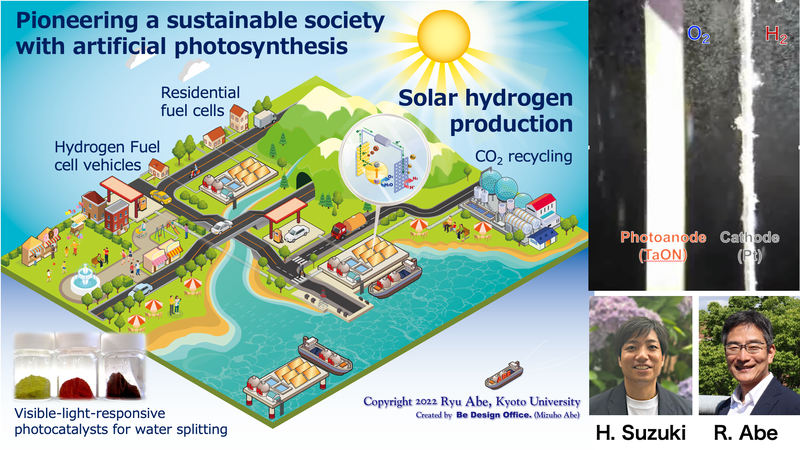
Our laboratory is advancing research and development aimed at realizing “artificial photosynthesis” technologies, such as clean solar hydrogen production through photocatalytic water splitting using semiconductor photocatalysts and the reduction and recycling of carbon dioxide. We design and synthesize novel photocatalytic materials to achieve highly efficient light-to-energy conversion systems. Our broad research spans fundamental to applied studies, aiming to contribute to solving energy and environmental challenges.
https://www.ehcc.kyoto-u.ac.jp/eh41/home/abe/en/
Ryu Abe Professor
Hajime Suzuki Assistant Professor
Catalytic Organic Chemistry
In 21st-century science, which strives to address environmental and energy challenges, the development of catalysts capable of achieving high efficiency and high selectivity is a critical research objective. Our research group aims to develop innovative organic synthetic reactions utilizing transition metal complexes. We are focused on establishing rational design for organic compounds with diverse and complex structures, as well as developing methodologies to obtain target products with high efficiency and selectivity.
https://www.ehcc.kyoto-u.ac.jp/eh42/home/
Tetsuaki Fujiwara Professor
Kazuhiko Semba Junior Associate Professor
Catalyst Design Engineering
Our research group focuses on the development of solid catalysts and functional inorganic materials for material and energy conversion and environmental purification. Our research centers on solid oxide fuel cells/electrolysis cells, proton-conducting ceramic fuel cells, and electrochemical devices utilizing novel ion conductors. Through electrochemical evaluation using practical cells and microstructural analysis, we work to elucidate material functions and reaction mechanisms. In addition, we conduct research on catalyst development for hydrogen carriers and on the fundamental properties of inorganic solid materials, aiming to address energy and environmental challenges through the creation of novel functionalities by combining inorganic materials.
https://www.eguchi-lab.ehcc.kyoto-u.ac.jp/english.html
Toshiaki Matsui Associate Professor
Shinji Naruse(*)Assistant Professor

Organotransition Metal Chemistry
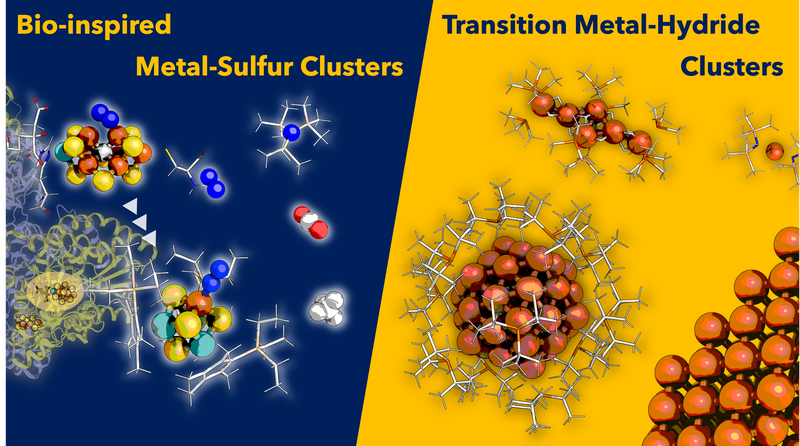
Our laboratory conducts cutting-edge research in coordination and organometallic chemistry based on “cluster complexes”, which contain multiple metals in a molecule. Inspired by metallo-enzymes and industrial catalysts, we aim to address global energy and environmental challenges through small-molecule transformations such as nitrogen fixation and CO2 reduction. Students engage in the entire research process—from molecular design and synthesis to structural characterization and reactivity study—enabling them to develop both fundamental skills and scientific creativity. In our small, highly interactive group, each member leads an independent project while collaborating in an international environment, preparing them to become globally active researchers.
https://www.om.kuicr.kyoto-u.ac.jp/home
Yasuhiro Ohki Professor
Kazuki Tanifuji Assistant Professor
Hitoshi Izu Assistant Professor
Sukyeong KIM(*)Assistant Professor
Isotope Chemistry
In our laboratory, we aim to deepen the understanding of the periodic table—the "map" of elements—by elucidating the chemical properties of heavy and superheavy elements at the extreme frontier of the table. To achieve this, we utilize single-atom chemistry techniques applicable to superheavy elements with short half-lives and low production rates. Furthermore, by applying the techniques developed through this process, we are advancing research on chemically functional radiation detectors and useful radioisotopes for medical and other practical applications.
https://labo.rri.kyoto-u.ac.jp/isochem/
Tetsuya K. Sato Professor
Catalysis Chemistry
Catalysts are defined as substances that dramatically increase reaction rates without shifting the chemical equilibrium, a phenomenon known as catalysis. By employing appropriate catalysts, it becomes possible to synthesize unique chemical compounds and easily detoxify chemically stable environmental pollutants. As such, catalysts and catalysis constitute a cornerstone technology underpinning modern society, essential for the chemical industry, fine chemical synthesis, and automotive exhaust purification. Creating truly valuable catalysts requires precise design at the molecular and nano-levels, grounded in a fundamental understanding of reaction mechanisms. With this approach, our laboratory focuses on developing next-generation catalysts, electrocatalysts, and photocatalysts, and constructing new catalytic chemical processes. Our ultimate goal is to reduce environmental impact and contribute to the realization of a circular society.
http://www.moleng.kyoto-u.ac.jp/~moleng_04/en/
Kentaro Teramura Professor
Shoji Iguchi Associate Professor
Shinpei Naniwa Assistant Professor

Energy Process Engineering
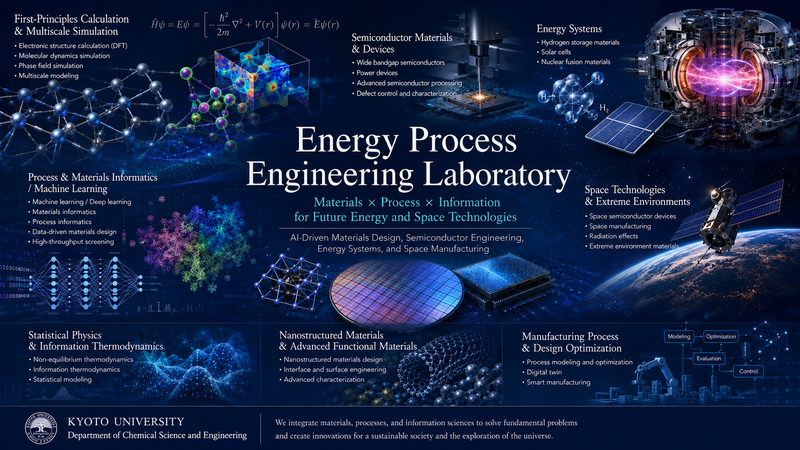
Our laboratory conducts research on energy materials, semiconductor materials, and manufacturing processes using computational simulations and artificial intelligence. We address a wide range of scales, from fluids to solids and from the nanoscale to the macroscale, and aim to achieve an integrated approach from materials design to manufacturing process optimization through the understanding of physical phenomena based on first-principles calculations, machine learning, and statistical physics. In addition, we promote research on advanced technologies that will support future society, including solar cells, hydrogen storage, nuclear fusion, space-oriented devices, and functional polymers.
http://www.cheme.kyoto-u.ac.jp/5koza/en/
Katsuaki Tanabe Professor
Souta Miyamoto Assistant Professor