【Molecular Systems and Materials Chemistry】From Protons to Hydrides: A New Route to Hydride-Containing Oxides
Hydride ions (H⁻) incorporated into oxide frameworks have attracted considerable attention because they endow materials with unique chemical and electronic properties, enabling applications ranging from ammonia synthesis catalysts to next-generation electrochemical devices. However, hydrogen normally exists in oxides as positively charged protons (H⁺), and replacing them with hydride ions in a controlled and thermally stable manner has remained a longstanding challenge.
A research team led by Assistant Professor Daichi Kato and Professor Hiroshi Kageyama of the Department of Chemical Science and Engineering, Kyoto University, in collaboration with Professor Hitoshi Takamura and co-workers at Tohoku University, has developed a new strategy to overcome this challenge. Using scandium-substituted BaZrO₃, a well-known proton-conducting oxide, they successfully replaced the incorporated protons with hydride ions.
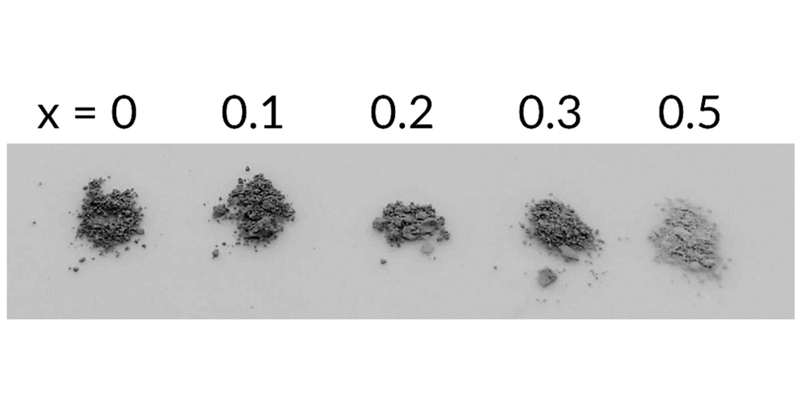
The amount of hydride ions introduced can be precisely tuned simply by controlling the scandium concentration. Moreover, a significant fraction of the incorporated hydride ions remains stable even above 800 °C, overcoming two major limitations of conventional hydride-containing oxides: poor control of hydride concentration and limited thermal stability. This achievement provides a new platform for designing thermally robust hydride-containing oxides with precisely controlled compositions and opens new opportunities for functional materials based on hydride chemistry.
The findings were published on June 26, 2026, in the Journal of Materials Chemistry A.
Paper Information
| Title | Thermally stable and tunable hydride-ion incorporation in Sc-doped BaZrO₃ |
| Authors | Itsuki Yaegashi, Itaru Oikawa, Akihiro Ishii, Hikaru Takeuchi, Yuki Sasahara, Daichi Kato, Hiroshi Kageyama, Hitoshi Takamura* |
| Journal | Journal of Materials Chemistry A |
| DOI | 10.1039/D6TA02652D |
| KURENAI |