【Molecular Systems and Materials Chemistry】Performance Boost in Organic Photovoltaics with Novel Commonsense-Defying Material: Progress Toward Low Cost and Practical Large-Area Applications
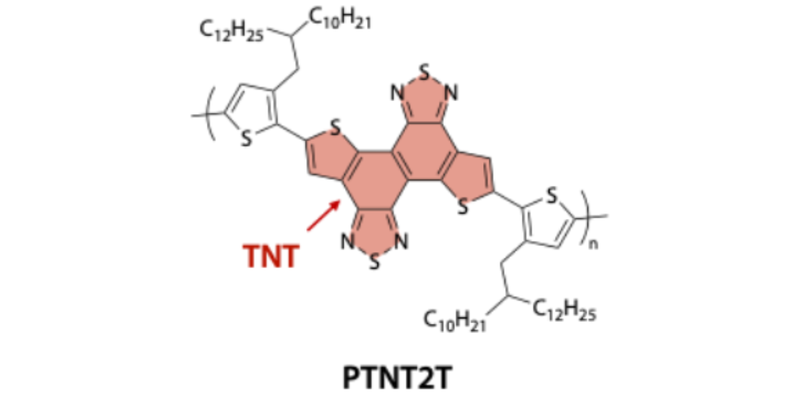
Professor Hideo Ohkita of the Graduate School of Engineering, Kyoto University, in collaboration with a joint research team led by Professor Itaru Osaka (Graduate School of Advanced Science and Engineering, Hiroshima University), has successfully clarified the origin of high charge mobility in a polymer semiconductor previously developed by the Hiroshima University group, PTNT2T. The team—which included Assistant Professor Tsubasa Mikie (Hiroshima University) and Dr. Yusuke Nishiyama (JEOL Ltd.)—achieved a world-class level of energy conversion efficiency in organic photovoltaics (OPV).
Traditionally, it was widely believed that in polymer semiconductors, the regular alignment and stacking of polymer main chains into ordered crystalline structures was indispensable for improving charge transport performance. However, previous studies had revealed that PTNT2T exhibits high charge mobility despite having a low structural order (crystallinity). In this study, the joint research team discovered that the TNT backbones forming the polymer main chain overlap at the molecular level through a mechanism termed “core-to-core stacking”, thereby creating efficient charge transport pathways despite the low crystallinity.
Furthermore, the team demonstrated that OPVs utilizing PTNT2T as a donor material can maintain a high fill factor (FF) even when the photoactive layer is thickened. In particular, when using a fullerene derivative (PCBM) as the acceptor material, the team successfully achieved an FF exceeding 80% even in a thick film of over 300 nm, marking a world first and realizing a power conversion efficiency of 12%. When scaling up OPVs for large-area production, the adoption of coating methods necessitates thickening the photoactive layer; thus, maintaining performance under thick-film conditions is a critical challenge. Achieving high conversion efficiency using PCBM—a relatively inexpensive acceptor material—represents a vital breakthrough for low-cost manufacturing.
These research findings present a novel molecular design principle for polymer semiconductors that does not rely on high crystallinity, and are expected to accelerate the practical application of OPVs, which have recently attracted significant attention as a next-generation solar technology.
This research was published online in Chemical Science, a comprehensive flagship journal of the Royal Society of Chemistry (RSC), at 6:00 PM (JST) on Monday, July 13, 2026.
Paper Information
| Title | "Core-to-Core Overlap Enables Efficient Interchain Charge Transport beyond Crystalline Domains in a Conjugated Polymer: High Fill Factors in Thick Organic Photovoltaic cells" |
| Authors | Tsubasa Mikie*, Tomokazu Morioku, Kodai Yamanaka, Momoka Hada, Hiroyuki Ishii, Yuki Sato, Jihun Jeon, Yutaka Ie, Kyohei Nakano, Keisuke Tajima, Yusuke Nishiyama*, Hyung Do Kim, Hideo Ohkita*, Itaru Osaka* |
| Journal | Chemical Science |
| DOI | 10.1039/d6sc01947a |
| KURENAI |