Molecular Systems and Materials Chemistry
List of Laboratories
Functional Materials Design
Our research is focused on both fundamental studies of the crystal chemistry of complex oxides and their application as components in next-generation memories and low-power electronic devices. Much effort is directed at understanding the interplay between crystal/electronic structures and physico-chemical properties and how this translates to functional properties. To achieve the rational design of functional materials, we utilize advanced synthesis and characterization techniques coupled with first-principles calculations. Our ultimate goal is to reveal the hidden potentials of oxides and open new perspectives for applications.We also aim to establish a new paradigm for materials design in order to develop next-generation functional oxides with new or technologically relevant properties.
https://www1.kuic.kyoto-u.ac.jp/en/
Koji Fujita Professor
Wei Yi Associate Professor
Yukiko Obata Assistant Professor

Inorganic Structural Chemistry
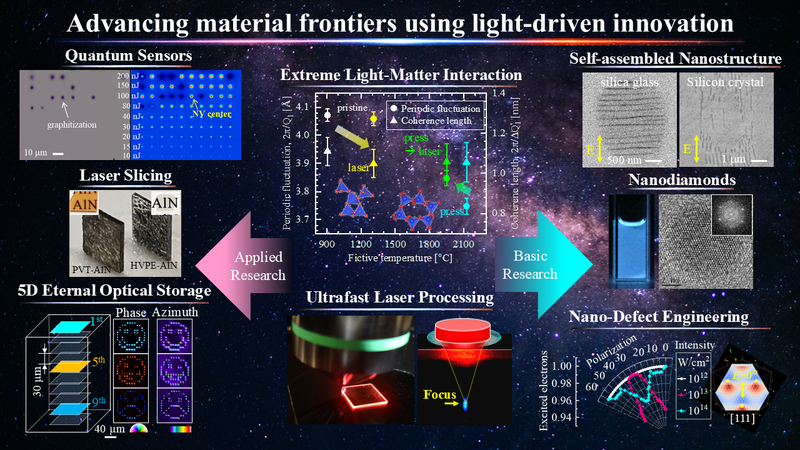
Our research group focuses on ultrafast laser-induced structural modification of inorganic materials and the underlying mechanisms of nonequilibrium structural formation. By exploring light-matter interactions, we develop advanced nano- and defect-engineering techniques to tailor material properties. Our goal is to create innovative photonic materials and devices with novel functionalities. From fundamental physics to practical applications in photonics, we strive to pioneer the future of materials science through the power of light.
http://func.mc.kyoto-u.ac.jp/?lang=en
Yasuhiko Shimotsuma Associate Professor
Industrial Solid-State Chemistry
Based on the solid-state chemistry, we are conducting research on the synthesis of novel crystalline and amorphous oxides, clarification of their crystal and band structure, and characterization of their electrical and magnetic properties. Our main research themes include the synthesis, structural analysis, and evaluation of physical properties of transition metal oxides where ferroic orderings of dipoles and spins coexist. and the growth of wide bandgap oxide semiconductor thin films via mist chemical vapor deposition process, the evaluation of their semiconducting properties, and their application to Schottky barrier diodes and field-effect transistors.
http://dipole7.kuic.kyoto-u.ac.jp/
Katsuhisa Tanaka Professor
Polymer Physics and Function
Soft materials, including biological soft tissues, play essential roles as fundamental materials supporting life activities and a wide range of industrial applications such as tires, biomedical materials, foods, and cosmetics. Owing to their dual nature of liquids and solids, the mechanical and physical behaviors of soft materials cannot be fully explained within the conventional framework of materials science, and many fundamental issues remain unsolved. At the same time, their high molecular mobility and diverse internal degrees of freedom enable advanced functional designs that respond to external stimuli such as mechanical forces, temperature changes, and light. In our laboratory, we employ rheological measurements and nonlinear mechanical analyses as core methodologies to investigate the physical properties and functions of polymer-based soft materials. Through a fundamental understanding of their underlying mechanisms, we aim to establish scientific principles that lead to enhanced performance and the creation of novel functionalities.
https://www-6.polym.kyoto-u.ac.jp/en/
Kenji Urayama Professor
Jun-ichi Horinaka Associate Professor
Kakeru Obayashi Assistant Professor
Biomaterials Chemistry
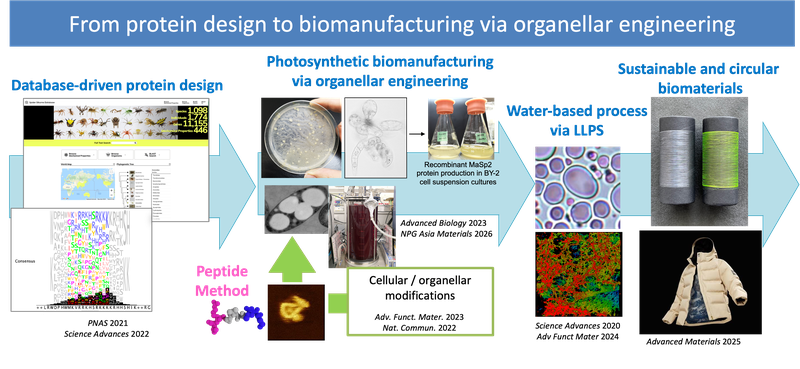
Our research group studies on design and synthesis of polypeptides for structural material engineering and plant engineering. Polypeptide has a huge potential to replace the existing materials and construct the biomass-based and sustainable society, because natural high-performance and functional materials are mainly composed of polypeptide. Polypeptide has been recognized as bioactive and functional material, however, use of those biopolymers as structural materials is still challenging. In my research, as a structural material, polypeptides are engineered as a structural material like spider dragline.
http://pixy.polym.kyoto-u.ac.jp/index_en.html
Keiji Numata Professor
Masaki Odahara(*)Associate Professor
Masashi Ohmae Junior Associate Professor
Kayo Terada(*)Lecturer
Simon Law Assistant Professor
Yasuha Watanabe Assistant Professor
Yui Tsuji Assistant Professor
YAGI, Shamitha Rao(*)Assistant Professor
OKTAVIANI, Nur Alia(*)Assistant Professor
Brandon Meza(*)Assistant Professor
Fundamental Glass Science
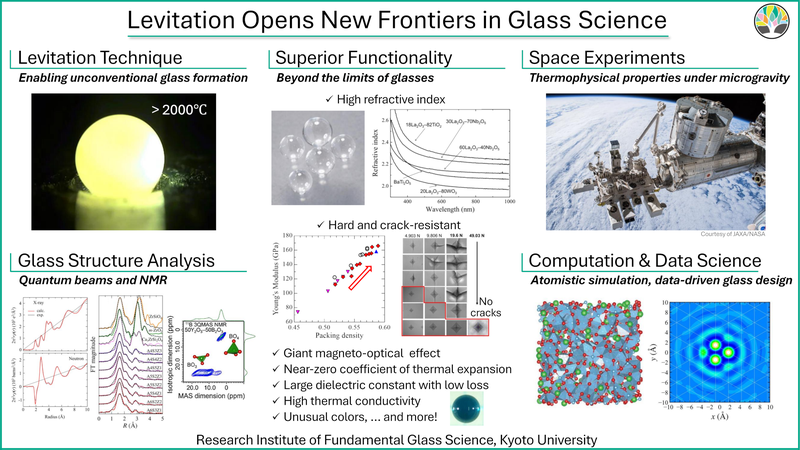
We synthesize “unconventional oxide glasses”by using a levitation technique. These glasses are remarkable in that they are formed in compositional regions where glass formation has been considered difficult and exhibit properties that surpass those of conventional glasses. We aim to elucidate the mechanisms of glass formation and functionalities that are difficult to explain within conventional glass science, through advanced structural analyses that integrate quantum beam measurements, computational science, data science, and space experiments in the International Space Station. Based on atomic- and electronic-level understanding, we seek to establish a “new” glass science.
https://fgs.mc.kyoto-u.ac.jp/People/index.html
Atsunobu Masuno(*)Professor
Nobuaki Terakado(*)Associate Professor
Yuta Shuseki(*)Assistant Professor
Solid State Chemistry
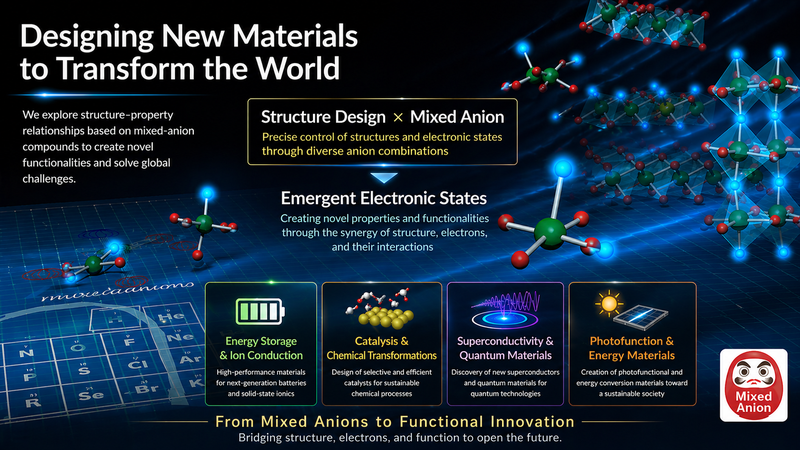
The synthesis of new materials lies at the heart of chemistry. The Kageyama Laboratory conducts leading research on mixed-anion compounds as next-generation inorganic materials. By focusing on hydride ions (H⁻) as active anions, we develop new compounds that provide a materials-science foundation for a hydrogen-based society. Starting from newly synthesized materials, we explore innovative functionalities such as catalysts, batteries, and high-temperature superconductors.
https://www.ehcc.kyoto-u.ac.jp/eh10/
Hiroshi Kageyama Professor
Tong ZHU Associate Professor
Suguru Yoshida(*)Associate Professor
Hiroshi Takatsu Associate Professor
Daichi Kato Assistant Professor
Synthetic Organotransformation
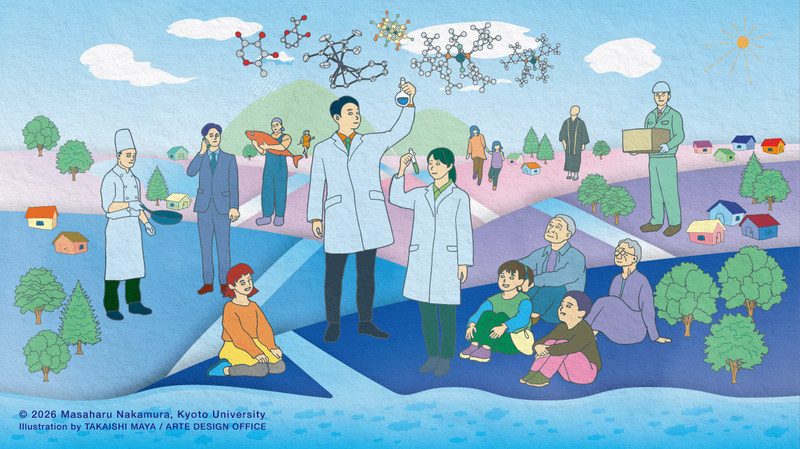
Building a sustainable society requires the efficient use of our limited natural resources. In our laboratory, we aim to develop new ways to utilize metal and carbon resources based on organometallic chemistry and to support their implimentation. Specifically, we design new catalytic reactions by combining organic synthesis, quantum chemical calculations, and machine learning. We focus on iron-based catalysts, which use iron—an abundant element in the Earth’s crust—as well as metal nanocluster catalysts composed of multiple metal atoms. We also explore chemical transformations that convert renewable carbon resources, such as biomass, into useful organic molecules.
https://www.scl.kyoto-u.ac.jp/~elements/en/
Masaharu Nakamura Professor
Katsuhiro Isozaki Associate Professor
Francesca PINCELLA Junior Associate Professor
Takahiro Doba Assistant Professor
Yuka Kawahara-Nakagawa(*)Assistant Professor
Keito Mineo(*)Assistant Professor
Structural Organic Chemistry
In our laboratory, we focus on the synthesis of novel organic compounds that possess unique three-dimensionally expanded π-conjugated systems, in contrast to the typically planar nature of conventional π-conjugated molecules, and on the exploration of their new physical properties. In particular, we have been investigating fullerenes, spherical carbon molecules, and have developed organic synthetic methods under mild conditions to introduce openings into their π systems. Using these molecules, we study the realization of multistep redox systems, the elucidation of novel optoelectronic properties, and their ability to act as hosts that encapsulate small molecules.
https://www.scl.kyoto-u.ac.jp/~kouzou/en/index.html
Yasujiro Murata Professor
Yoshifumi Hashikawa Assistant Professor
Organic Functional Materials Chemistry
Our laboratory focuses on developing innovative optoelectronic materials that overcome the limitations of existing materials. Focusing primarily on π-conjugated compounds, which play a central role in exploring the optoelectronic properties of organic molecular materials, we design molecular structures that are truly essential to achieving unprecedented properties. Our work encompasses the development of novel synthetic methodologies, elucidation of physical properties, and exploration of new functions. By pursuing “functional beauty” in molecular materials, we aim to advance and deepen both fundamental organic chemistry and materials science.
https://fukazawa.icems.kyoto-u.ac.jp/
Aiko Fukazawa Professor
Theoretical Chemistry
The true strength and appeal of theoretical chemistry lies in surveying complex chemical phenomena and abstracting their fundamental principles. Our laboratory applies various theoretical approaches to study diverse chemical phenomena ranging from solutions, solids, and biological systems. By developing unique theoretical frameworks that combine quantum chemistry, statistical mechanics, and dynamics, we aim to understand molecules and molecular systems in complex environments and to establish novel concepts and perspectives to explain them.
https://www.riron.moleng.kyoto-u.ac.jp/index_en.html
Hirofumi Sato Professor
Toshifumi Mori Associate Professor
Nguyen Thanh Phuc Junior Associate Professor
Kanami Sugiyama Assistant Professor
Daichi Morimoto Assistant Professor
Hiroki Uratani Assistant Professor
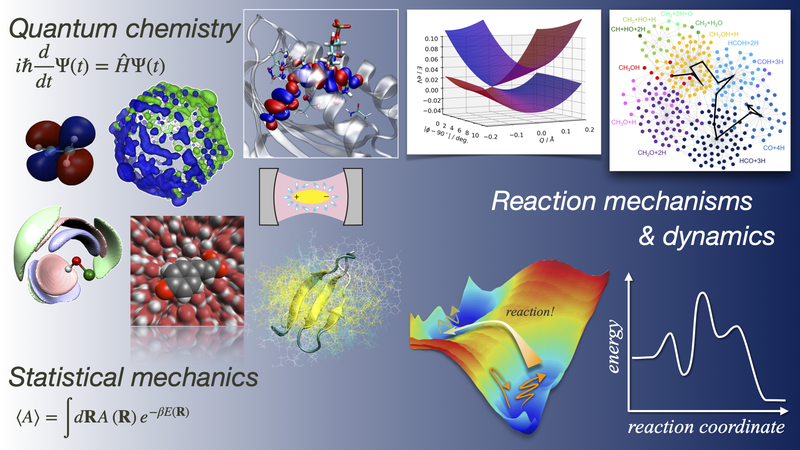
Photo-organic Chemistry
Photoinduced electron transfer underlies a wide range of functions, including photosynthesis, solar cells, light‐emitting materials, and vision. Our laboratory conducts both fundamental and applied research based on photochemistry, organic chemistry, and materials chemistry, with an emphasis on understanding basic principles while keeping future device applications in mind. Specifically, we focus on the construction of photoenergy conversion model systems using photofunctional dyes such as porphyrins and various organic and inorganic functional materials, elucidation of charge separation mechanisms, development of materials for organic solar cells, and the design and synthesis of novel π-conjugated compounds utilizing heteroatoms.
http://www.moleng.kyoto-u.ac.jp/~moleng_05/en/
Hiroshi Imahori Professor
Tomohiro Higashino Associate Professor
Condensed Matter Physical Chemistry
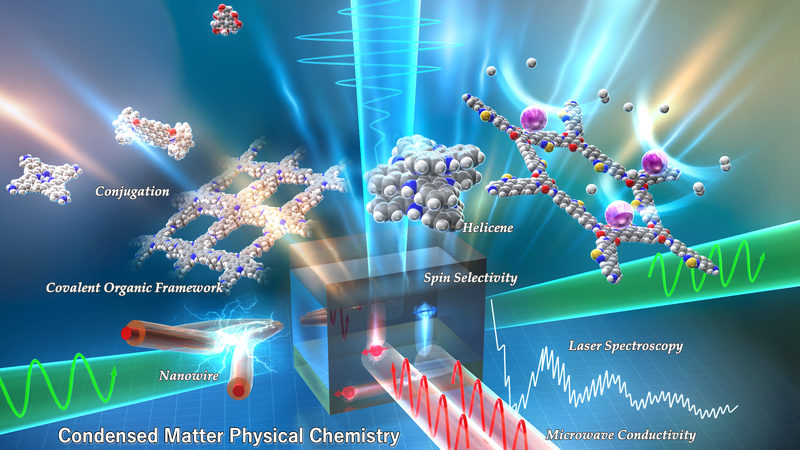
Interactions of electromagnetic waves, photons, and ionizing radiations with matter induce a variety of chemical reactions and generate transient species that cannot be produced by conventional thermochemical processes. These interactions also play an important role as powerful tools for elucidating the fundamental physucal properties of matter. Our laboratory focuses on organic molecules and their conjugated polymeric materials, as well as inorganic/organic–inorganic hybrid materials, with intriguing optical, electrical, and magnetic properties. Based on their synthesis and structural control, we construct molecular assemblies and periodic porous structures, and investigate their physical properties via the transient species generated therein.
http://www.moleng.kyoto-u.ac.jp/~moleng_06/index.php?lang=en
Shu Seki Professor
Takayuki Tanaka Associate Professor
Yusuke Tsutsui Assistant Professor
Quantum Material Science
Our laboratory conducts integrated research ranging from the chemical vapor deposition of high-quality diamonds to quantum state control and the development of quantum sensors with ultra-high sensitivity and spatial resolution. By leveraging color centers in diamond, we are challenging the creation of innovative measurement technologies that transcend the boundaries of physics, chemistry, and materials science—spanning from life science applications, such as intracellular temperature and magnetic field sensing, to the search for dark matter. Through the fusion of novel materials and quantum science, we aim to visualize and unveil the previously unseen.
http://mizuochilab.kuicr.kyoto-u.ac.jp/indexE.html
Norikazu Mizuochi Professor
Naoya Morioka Associate Professor
Kyoko Furuita Associate Professor
Izuru Ohki(*)Associate Professor
Ei Shigematsu(*)Associate Professor
Tetsuri Nishikawa Assistant Professor
Molecular Rheology
Polymers are a typical soft matter, of which ordered structures are governed by entropy. Controlling the entropy (degrees of freedom) of a system is essential to fabricating structural order and achieving the desired physical properties of polymers. We focus on the nano-segregated structures (restricted spaces) formed by block copolymers and liquid crystals (orientation order), where the entropy of polydisperse polymers in a fluid state is moderately reduced. Through the use of scattering methods and various spectroscopic techniques, we seek to elucidate the correlation between structure and physical properties, as well as to achieve functionalization of practical aromatic polymers.
Yumi Matsumiya Associate Professor
Organic Materials Science
The primary goal of our research is to develop materials and devices for use in optoelectronics, especially in organic light-emitting diodes. To gain a better understanding of the structure-property relationship of functional materials at the molecular level, we use quantum chemical calculations, solid-state NMR, dynamic nuclear polarization NMR (DNP-NMR), and optical and thermal measurements.
https://scl.kyoto-u.ac.jp/~moma/index-e.html
Hironori Kaji Professor
Katsuaki Suzuki Associate Professor
CHOI Heekyoung Assistant Professor
Quantum Molecular Science
Our research focuses on developing new concepts for molecular and reaction design by elucidating mechanisms underlying molecular functions. Specifically, by analysing and controlling vibronic couplings, which refer to the interaction between molecular vibrations and electronic states, we investigate photophysical processes such as enhancing photoluminescence efficiency and controlling spectral lineshape in emitting molecules. Additionally, by employing a reactivity index that incorporates molecular vibrations and electronic states, we elucidate and design mechanisms for automotive exhaust purification catalysts and carbon dioxide resource-conversion catalysts.
https://www.fukui.kyoto-u.ac.jp/satolab/
Toru Sato Professor
Naoki Haruta(*)Associate Professor
Wataru Ota(*)Assistant Professor
Porous Physical Chemistry
The Sivaniah research group (Pureosity), focuses on advanced materials science and separation technologies, combining synthetic polymer chemistry with bio-inspired approaches to create functional materials with precisely controlled structure and properties. The group is internationally recognised for its work on membrane science, particularly energy-efficient gas and liquid separations, including carbon capture and environmental applications. More recently, the research has expanded into sustainable and biomimetic materials, spanning areas such as PFAS alternatives, high-resolution porous materials, bionanotechnology, and materials for biological analysis and diagnostics.
Sivaniah, Easan Professor
Namasivayam, Ganesh Pandian Junior Associate Professor
Masateru Ito(*)Assistant Professor
Qin Detao(*)Assistant Professor
Advanced Functional Polymers
Using living cationic polymerization, we synthesize polymers with various structures and functional groups, aiming to form a wide range of self-assembly structures to develop special properties. One of the research themes is to create hydrogels using stimuli-responsive materials that can function as actuators. There is a particular focus on researching thermoresponsive hydrogels with tunable temperatures. The second research theme is to form supramolecular polymer networks and various self-organized bodies through complementary intermolecular interactions, and to examine their properties and stimuli-responsiveness. In particular, this project focuses on developing polymers capable of halogen-bonding interactions, examining the effects on their properties, and researching supramolecular polymer networks and various self-organizing polymer structures.
Landenberger, Kira B. Junior Associate Professor
Functional Polymer Synthesis
Our research group explores the boundary between supramolecular chemistry and polymer chemistry to create new substances and materials. By precisely designing the interactions that operate between molecules, we aim to develop functions and properties that cannot be observed in individual molecules. We are particularly interested in generating polymer-like materials solely from small molecules, and through this line of research, we hope to contribute to solving environmental issues such as plastic pollution. We also work on functional polymers and stimuli-responsive materials, among other topics.
https://sugiyasu.polym.kyoto-u.ac.jp/
Kazunori Sugiyasu Professor
Yuichiro Watanabe Assistant Professor
Natsumi Fukaya Assistant Professor
Synthetic Polymer Chemistry
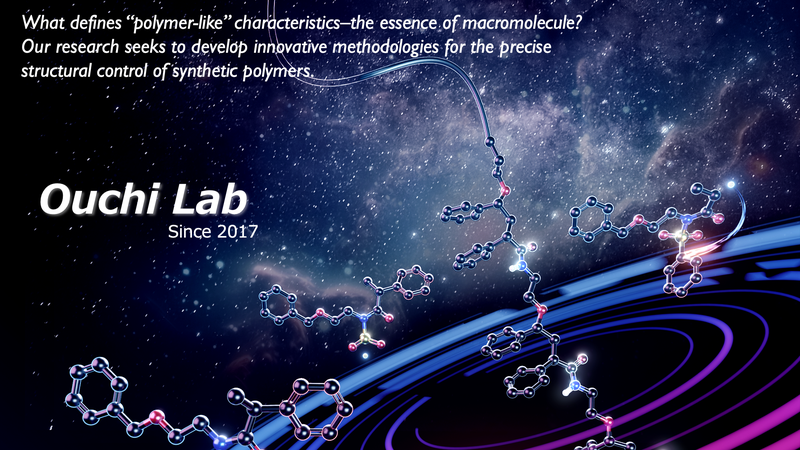
Biopolymers that function within living systems, such as DNA and proteins, are macromolecules like synthetic polymers used in everyday materials, yet they differ profoundly in their structural precision and functional expression. What defines “polymer-like” characteristics (the essence of macromolecule)? To address this question, we pursue research aimed at developing original methodologies for the precise structural control of synthetic polymers and at elucidating macromolecular nature through structurally well-defined “precision polymers.” Furthermore, we seek to create new polymeric materials based on such structural control.
http://www.living.polym.kyoto-u.ac.jp/index_Eng.html
Makoto Ouchi Professor
Tsuyoshi Nishikawa Assistant Professor
Polymerization Chemistry
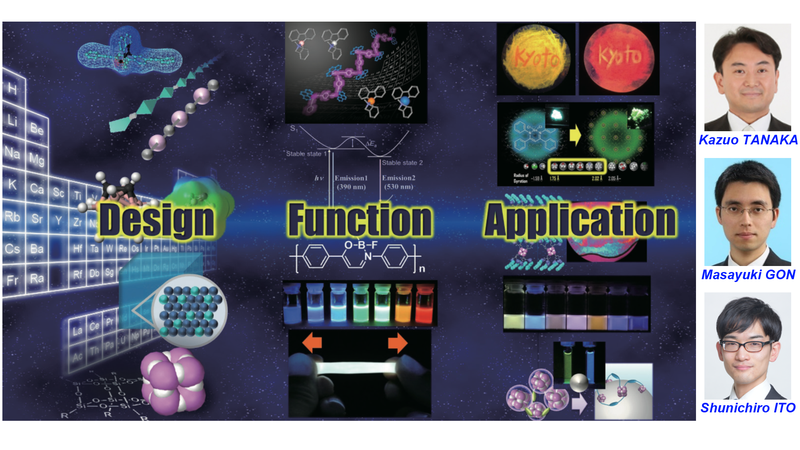
Polymer materials are conventionally used in a wide range of applications, from everyday items to cutting-edge devices. By utilizing elements that have not been used in polymers until now, we can expect to create materials with new functions, such as electronic, optical, and catalytic properties, and molecular recognition capabilities, that reflect the characteristics of the elements. Our laboratory aims to establish synthetic methods and material designs that take into account all elements in the periodic table, and to utilize these methods in the development of functional materials and to discover new "faces" of previously unknown elements.
https://poly.synchem.kyoto-u.ac.jp/
Kazuo Tanaka Professor
Masayuki Gon Assistant Professor
Shunichiro Ito Assistant Professor
Polymer Structure and Function
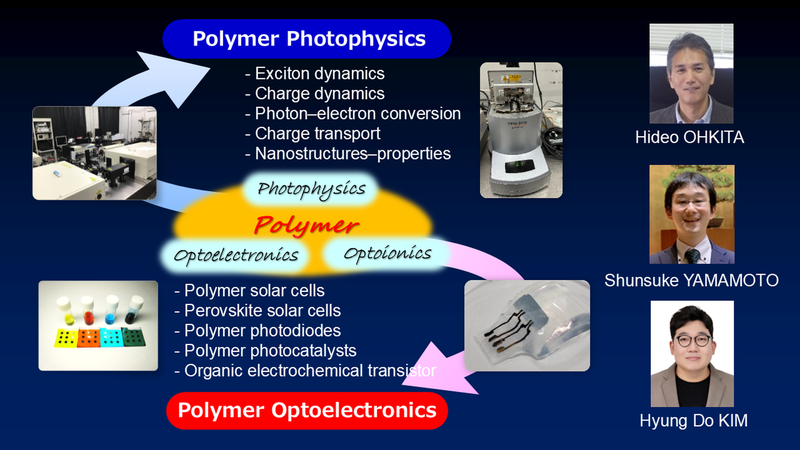
In our laboratory, we study optoelectronic properties of polymers and their functionalities. In other words, we study conjugated polymers as key materials based on three keywords: photons, electrons, and ions. Using light as a tool, we aim to elucidate the properties and functions at the molecular level by directly observing ultrafast phenomena that give rise to optoelectronic properties at the molecular temporal and spatial scales. Recently, we have been working on the development of polymer solar cells to address the global challenge of energy issues.
https://photo.polym.kyoto-u.ac.jp/en
Hideo Ohkita Professor
Shunsuke Yamamoto Associate Professor
Polymer Molecular Science
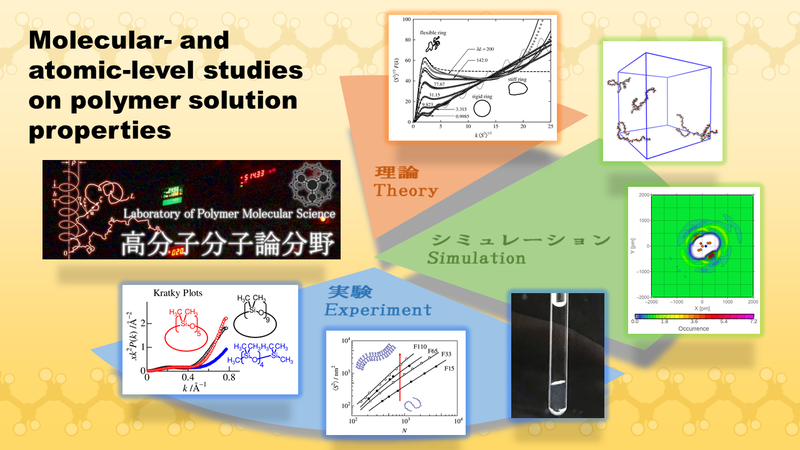
We analyze the molecular weight dependence of quantities obtained from macroscopic properties such as viscosity, osmotic pressure, and scattered light intensity of polymer solutions using our uniquely developed polymer theory, and obtain molecular-level information on the stiffness, thickness, local structure, branching state, and intermolecular interactions of polymer chains.
http://www.molsci.polym.kyoto-u.ac.jp/index-e.html
Yo Nakamura Professor
Daichi Ida Associate Professor
Akiyuki Ryoki Assistant Professor
Fundamental Physical Chemistry
In polymeric materials, hierarchical higher-order structures develop across multiple length scales, from the molecular to the macroscopic level, and these structures strongly influence material properties and functions. Therefore, to tailor material properties and realize new functionalities, it is important not only to precisely design the primary structure but also to understand the molecular mechanisms of higher-order structure formation and, based on that understanding, control the resulting structures. In our laboratory, we conduct research using statistical-mechanical theory, computer simulations, and data science, with the aim of gaining fundamental insights into structure formation and dynamics in polymer systems.
http://www.phys.polym.kyoto-u.ac.jp/
Tsuyoshi Koga Professor
Tsutomu Furuya Associate Professor
Hiroki Degaki Assistant Professor
Polymer Materials
Polymers are molecules composed of a large number of atoms linked in chain-like structures and are widely used in everyday products such as packaging and automotive components. Using quantum beams, we investigate the self-organization of polymer materials—phenomena in which molecules spontaneously form ordered structures—and identify new strategies to control it. By combining synchrotron X-ray scattering and electron tomography, we capture both the formation dynamics and three-dimensional nanoscale structures. Through big-data analysis, we quantitatively relate structure to properties, aiming to enhance the performance of tires, organic glass, and electronic device materials and to open new application fields toward Society 5.0.
Mikihito Takenaka Professor
Hiroki Ogawa Associate Professor
Yohei Nakanishi Assistant Professor
Kazuki Shibasaki Assistant Professor
Molecular Design of Polymer
We perform kinetic and mechanistic analyses toward understanding chemical and physicochemical reactions occurring in polymerization systems and better routes for synthesis of well-defined polymer materials. In particular, new well-defined polymers or polymer assemblies are prepared by controlled polymerization techniques, and their structure–properties relationships are precisely analyzed. Projects in progress include: 1) kinetics and mechanisms of controlled radical polymerization; 2) synthesis of new polymeric materials by controlled radical polymerizations and their structure/properties studies; 3) synthesis, properties, and applications of concentrated polymer brushes; and 4) Fabrication of polymer monolith particles from nanocellulose-stabilized emulsions and their applications in liquid chromatography.
http://www.cpm.kuicr.kyoto-u.ac.jp/
Koichiro Ishida Assistant Professor
Polymer Controlled Synthesis
Our laboratory is built on the creativity of synthetic chemistry; the joy of designing and creating entirely new molecules. With a curiosity-driven mindset and the motto “Let’s create shining molecules!”, each student begins by synthesizing a “shining molecule” of their own. Our ultimate goal is to transform these molecules into ones that truly shine by contributing to enriching future society. Specifically, our research focuses on the design and synthesis of new molecular catalysts for controlled polymerization, the creation of novel functional molecular materials, and the development of innovative methodologies for constructing new molecules.
Shigeru Yamago Professor
Misato Akiyoshi Assistant Professor
Biomaterials
Organic System Design
Our focus is on the establishment of new molecular science and technologies through designing and synthesizing new unique molecules and reactions. To find out outstanding molecular functions, the interdisciplinary knowledges in the various research fields including organometallic chemistry, organic synthesis, catalysis chemistry, asymmetric synthesis, polymer chemistry are actively integrated.
https://suginome-lab.sbchem.kyoto-u.ac.jp/
Michinori Suginome Professor
Lintuluoto,Juha Mikael Associate Professor
Takeshi Yamamoto Junior Associate Professor
Yukako Yoshinaga Assistant Professor
Functional Chemistry
Our laboratory focuses on creation of novel functional materials based on organic chemistry, host–guest chemistry, supramolecular chemistry, and polymer chemistry. By using intermolecular interactions to control molecular assembly and organization, we design and construct advanced functional systems. We develop cyclic molecules with intrinsic cavities and well-defined three-dimensional architectures to create functional spatial materials capable of storage, separation, and sensing. In addition, we are exploring luminescent materials based on polymers that exhibit aggregation-induced phosphorescence.
https://www.sbchem.kyoto-u.ac.jp/ogoshi-lab/index_en.html
Tomoki Ogoshi Professor
Kenichi Kato Assistant Professor
Shunsuke Ohtani Assistant Professor
Physical Organic Chemistry
Our research is dedicated to the development of novel organic functional materials that integrate optical, magnetic, and electrical properties. Guided by the principles of physical organic chemistry, we design and synthesize molecules using state-of-the-art organic synthetic methodologies. Our laboratory covers a wide range of research activities, from molecular design to the measurement of physical properties. One of the distinctive strengths of our lab is the ability to design new organic compounds based on original ideas, create entirely new substances, and rapidly advance to their experimental verification. We welcome motivated young researchers who are eager to join us in exploring and advancing new molecular frontiers.
https://www.sbchem.kyoto-u.ac.jp/matsuda-lab/index_en.html
Kenji Matsuda Professor
Kenji Higashiguchi Junior Associate Professor
Daiki Shimizu Assistant Professor
Organometallic Chemistry
While synthetic chemistry empowers society through the production of vital materials ranging from medicines to functional substances, it also drives scientific progress by providing the novel chemical entities that underpin drug discovery and materials chemistry. Amidst increasing demands for a sustainable society, our field is now expected to lead the way in utilizing renewable resources and wastes. Our mission is to explore new frontiers in sustainable and creative synthetic chemistry by evolving the integration of organic, organometallic, and photochemistry.
https://sites.google.com/kyoto-u.ac.jp/sbchem-organometallic-lab
Naoki Ishida Professor
Shintaro Okumura Assistant Professor
Molecular Assembly Chemistry
The Furukawa group develops novel porous materials that store, separate, release, transform, and align target molecules and ions. We use supramolecular metal-organic polyhedra with defined nanospaces as modular building blocks and assemble them through coordination and noncovalent interactions to control hierarchical structures across multiple length scales, from molecules to macroscale materials. This approach allows us to access diverse material states, including crystals, glasses, gels, liquids, and thin films, bridging fundamental science and application-driven materials design.
https://furukawa.icems.kyoto-u.ac.jp/
Shuhei Furukawa Professor
Soft Matter Engineering
We study a wide range of problems observed in soft matter systems (complex fluids, polymers, and colloids) using computational simulation methods. In microscopic simulations, including molecular simulations, treating soft matter typically requires enormous computational resources. This is because the phenomena of interest in soft matter often emerge at mesoscopic or macroscopic scales, making it necessary to develop simulation methods based on new ideas. By employing approaches grounded in fundamental principles such as statistical mechanics and fluid dynamics, we aim to establish original and novel methodologies that help elucidate the physical properties of soft matter, including colloidal dispersions and polymeric liquids, as well as the fundamental principles governing active matter, such as microswimmers and biological tissues.
https://sm.cheme.kyoto-u.ac.jp/home_jp.html
Ryoichi Yamamoto Professor
Takashi Taniguchi Associate Professor
MOLINA John Assistant Professor
Materilas Process Engineering
We live surrounded by many types of materials such as plastics, ceramics, and metals. These materials are shaped into various forms—blocks, fibers, particles, films—and combined according to their intended applications. Therefore, controlling the form and structure of materials is as crucial as selecting substances suitable for their applications. Our laboratory develops material fabrication processes that control the form and structure of materials to enable the realization of their functions.
http://www.cheme.kyoto-u.ac.jp/6koza/
Shinsuke Nagamine Associate Professor
Environmental Process Engineering
Our laboratory recognizes that establishing an industrial system capable of sustaining coexistence on Earth—one that effectively utilizes fossil and renewable resources while building mechanisms for material cycles and environmental load reduction—is the mission entrusted to engineers and technologists. To achieve this mission, we are developing and systematizing fundamental chemical engineering technologies, focusing on the development of rational biomass conversion technologies, the systematization of microchemical engineering, and the development of innovative CO2 reduction processes.
http://www.cheme.kyoto-u.ac.jp/8koza/
Taisuke Maki Associate Professor
Yosuke Muranaka Assistant Professor
Dynamic Interfacial Chemistry
Many applications used in chemical, pharmaceutical, and biotechnological industries require colloids (materials smaller than approximately 0.000001 m) to be dispersed or aggregated in liquids. The forces acting between the colloids determine if they will disperse or aggregate. The ability to change and control such forces would allow us to obtain systems with the desired physical properties. We are experimentally studying how non-equilibrium and dynamics can be used to change the forces acting in colloidal systems, so that we can obtain systems with the desired properties.
http://www.cheme.kyoto-u.ac.jp/11koza/en/
Cathy E. McNamee Professor